On September 13, 2013, The New York Times publshed an article titled "Legal Tussle Over Statue Turns Nasty" written by Tom Mashberg. This article tells of a legal battle over a statue of Duryodhana, a "hulking Hindu warrior." The U.S claimed that one of the world's largest auction houses is attempting to make money off of a looted artifact. The argument over the statue has led to the halt of the movement of the statue and the U.S. government believes they should take sole responsibility for the return of the Hindu statue since it was supposedly a stolen artifact. This claim was troubling because an Hungarian art collector by the name of Istvan Zelnik had offered to buy the statue for one million dollars and later donate it back to Cambodia. Now that the case is in court everyone involved is digging for evidence to prove whether the statue was stolen, and whether the United States is responsible for it's return to Cambodia, or not. The issue is put on hold in anticipation for the next court date which is scheduled for October 14.

As I read this article I began to wonder about how much power our government has. In the United States we are thought to have economic freedom, but as our government is fighting for "sole credit for the statue's return" one can't help but wonder why? Why must our government spend so much time and money over how a piece of artwork gets returned to its home? We are blessed to live in an economy where we can choose what we want to do with our lives and have the economic freedom we do. As I read this article however, I began questioning how well our government considers economic equity. Are we distributing our money, as scarce of a resource as it is, in the most important areas?
Article:
http://www.nytimes.com/2013/09/14/arts/design/legal-tussle-over-statue-turns-nasty.html?ref=arts&_r=0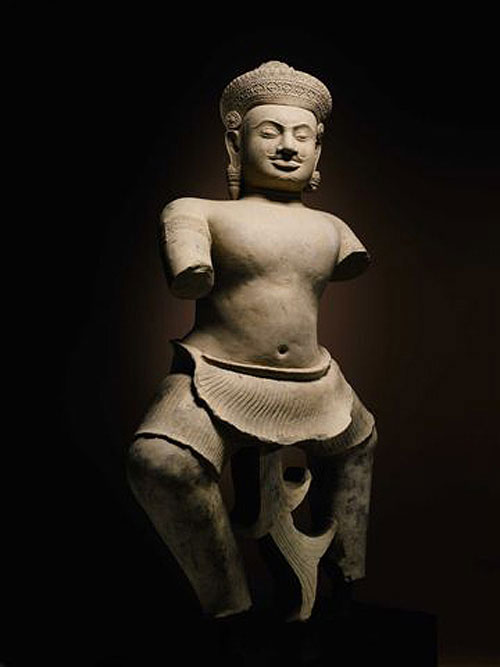

No comments:
Post a Comment